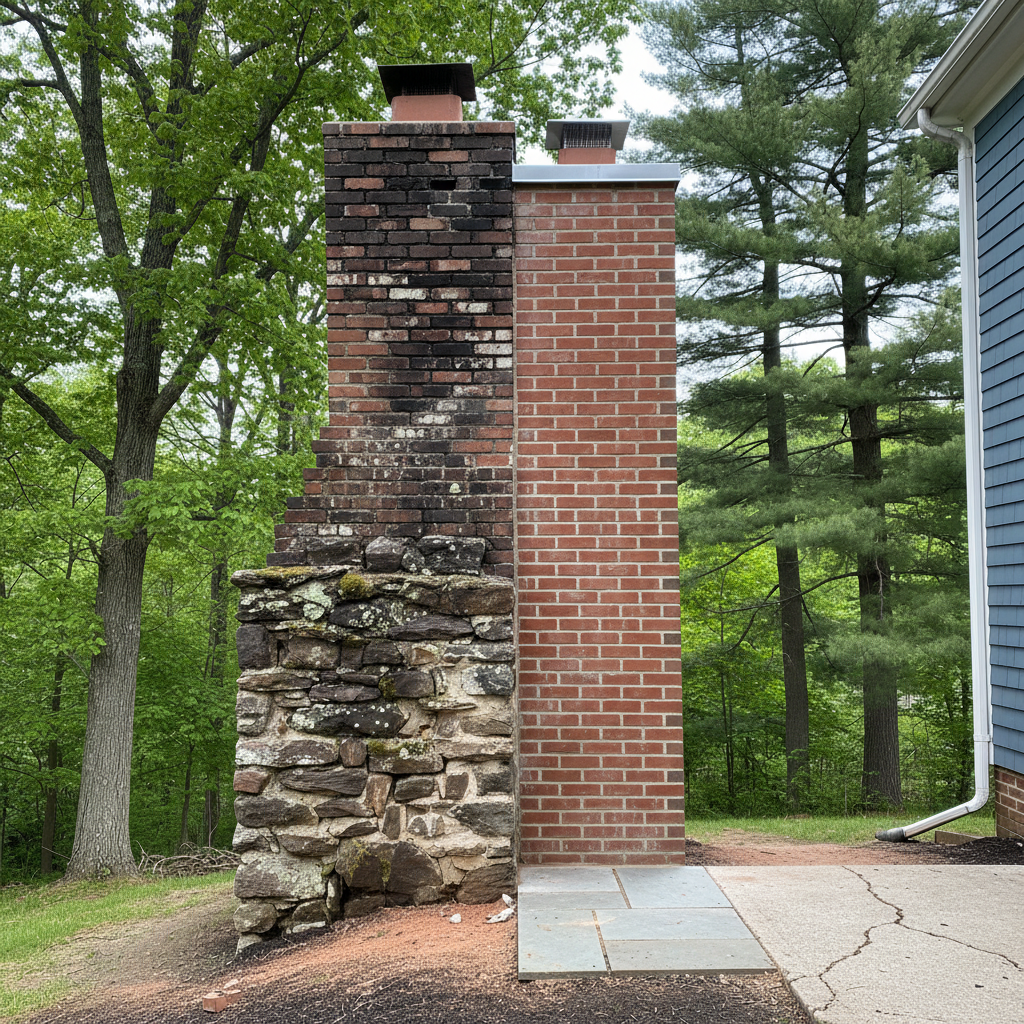
Got a chimney that's looking a bit rough? It's a common sight around Lexington, especially with our tough winters and the age of many homes. When you start noticing crumbling mortar, loose bricks, or water stains, you're usually looking at two main repair options: repointing or a full rebuild. I see a lot of folks get confused about which one they actually need, so let's clear it up.
What's Repointing, Anyway?
Repointing, sometimes called tuckpointing, is basically replacing the old, deteriorated mortar joints between your bricks. We carefully grind out the old stuff, usually about a half-inch deep, and then pack in fresh, new mortar. It's a precise job, and it's all about restoring the structural integrity and weatherproofing of your chimney without replacing the bricks themselves.
When is Repointing the Right Call?
Deteriorated Mortar: This is the big one. If the mortar is crumbling, sandy, or has deep cracks, but the bricks themselves are still in good shape – not spalling (flaking) or severely cracked – then repointing is likely your best bet.
Minor Leaks: Sometimes, water gets in through faulty mortar joints. Repointing can often seal these up and solve your leak issues.
Cost-Effective: Generally, repointing is significantly less expensive than a full rebuild. You're paying for labor and materials to replace mortar, not entire sections of brickwork.
Appearance: A good repointing job can make an old chimney look brand new, matching the original mortar color and joint style as closely as possible.
The downside? If the bricks are too far gone, repointing won't fix that. It's a repair for the mortar, not the brick.
When a Full Rebuild is Necessary
A chimney rebuild means we're taking down part or all of the existing chimney structure and building it back up with new materials. This is a much bigger job, obviously, but sometimes it's the only safe and lasting solution.
When You Need to Rebuild:
Extensive Brick Damage: If your bricks are spalling, severely cracked, or disintegrating, especially on the exposed sections above the roofline, repointing won't cut it. The bricks themselves are compromised.
Leaning or Bowing: A chimney that's visibly leaning or bowing is a serious structural hazard. This usually indicates foundation problems or severe water damage that has compromised the entire structure. Don't mess around with this; it needs immediate attention.
Multiple Flue Issues: If the chimney liner is extensively damaged, or if there are multiple flues that are failing, a rebuild might be more practical than trying to repair individual components within a failing structure.
Major Water Damage: Sometimes, water has gotten in and frozen repeatedly, causing widespread damage that goes beyond just the mortar. This is especially true for older chimneys in areas like the East Lexington neighborhoods where homes have seen decades of freeze-thaw cycles.
Age and Condition: If your chimney is very old and has seen multiple patchwork repairs over the years, a rebuild might be the most sensible long-term solution, even if it's more expensive upfront.
Cost, Durability, and Maintenance
Let's talk brass tacks.
Cost: Repointing typically runs anywhere from a few hundred to a couple of thousand dollars, depending on the size and complexity. A rebuild? You're usually looking at several thousand, easily reaching five figures for a full rebuild from the ground up. It's a significant investment.
Durability: A well-done repointing job using the right mortar mix can last 25-30 years, sometimes more. A rebuild, using new bricks and mortar, should last 50-100 years, essentially the lifespan of a new chimney.
Maintenance: Both require regular inspection. I tell all my clients to have their chimney inspected annually by a CSIA-certified sweep. For repointed chimneys, keep an eye on those new mortar joints. For rebuilt chimneys, you're mostly looking for early signs of wear or damage to the cap and flashing.
Appearance: Repointing can restore the original look. A rebuild will give you a brand new chimney, which can be a great aesthetic upgrade, especially if the old one was an eyesore.
My Recommendation for Lexington Homeowners
Given our climate here in Massachusetts – the heavy snow, the freezing rain, the intense freeze-thaw cycles – water is the biggest enemy of your chimney. It's relentless. This means that even minor issues can quickly become major ones.
My honest recommendation is this: if your bricks are still solid and only the mortar is failing, repointing is a fantastic, durable, and cost-effective solution. It'll protect your home for decades. But if you've got spalling bricks, a leaning structure, or widespread damage, don't try to patch it. That's a temporary fix for a permanent problem, and it can actually be more expensive in the long run because you'll end up rebuilding anyway, often after more damage has occurred.
The best thing you can do is get a professional assessment. We'll climb up there, take a good look, and give you an honest opinion on what's truly needed. At All Star Masonry Inc, we're not here to sell you something you don't need; we're here to make sure your chimney is safe, sound, and ready to handle whatever New England weather throws at it.