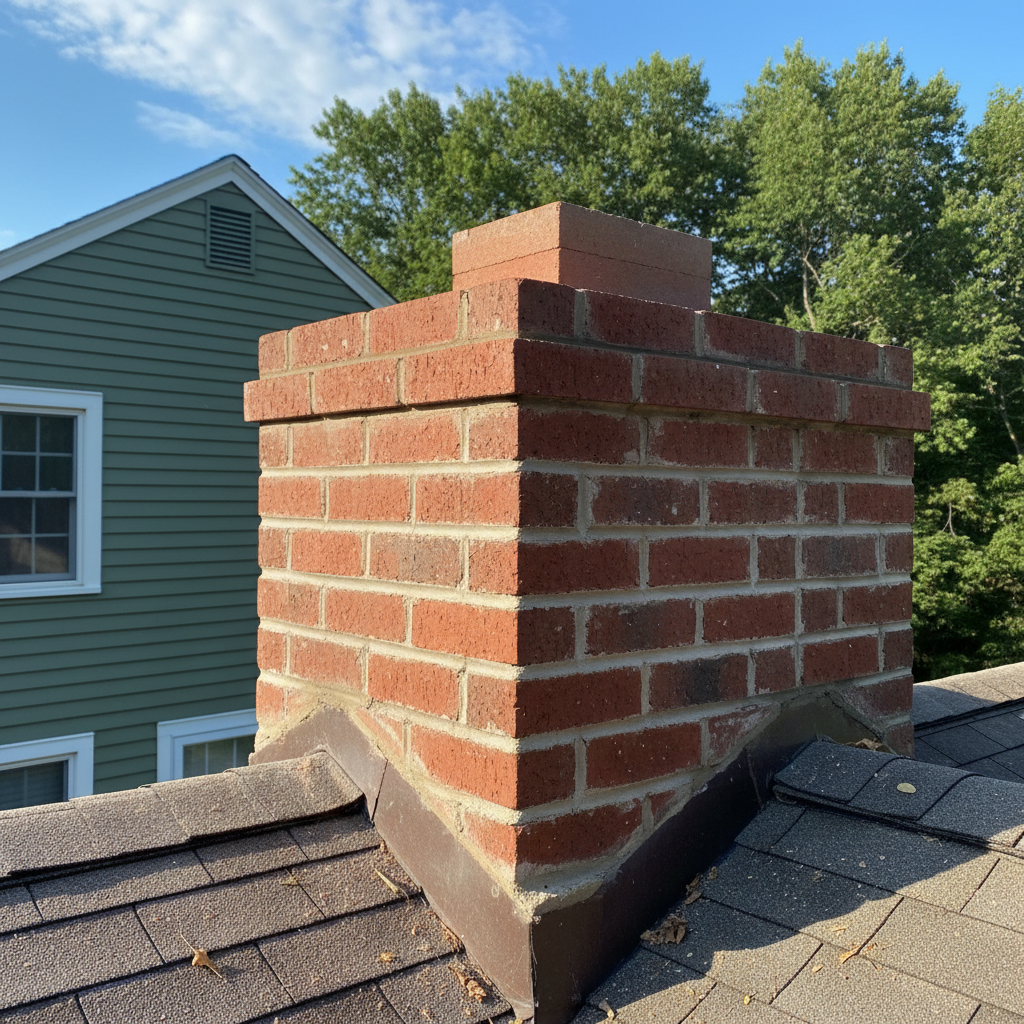
Why is my chimney leaking, even when it's not raining hard?
This is a super common one, and honestly, it can be tricky to pin down without seeing it. Most folks assume a leak means a crack in the masonry. And sometimes, you know, it is. But often, it's actually the flashing around the base of the chimney where it meets the roof. That metal can warp, lift, or just get old and fail, letting water seep right in. Another big culprit, especially with our freezing and thawing cycles here in Lexington, is a damaged chimney crown. That's the concrete slab on top; if it's cracked, water goes right down into the flue or even into the masonry below. Sometimes, it's even a missing or damaged chimney cap letting rain straight in. We've seen it all, and it usually takes a good inspection to figure out the exact source.
How often should I have my chimney inspected and cleaned?
The National Fire Protection Association (NFPA) recommends you get your chimney inspected annually. That's not just for cleaning, though cleaning is often part of it. An inspection looks at the whole system – the flue, the firebox, the damper, the crown, the cap, and the exterior masonry – to make sure it's safe and sound. Even if you don't use your fireplace much, an annual check is smart. Critters can build nests, debris can fall in, and small cracks can develop that you won't notice until it's a bigger problem. For cleaning, it really depends on how much you use it and what you're burning. If you're burning seasoned wood regularly, you'll likely need a cleaning every year. If it's more for ambiance a few times a winter, maybe every other year is fine, but still get that annual inspection.
What's the deal with chimney caps, and do I really need one?
Absolutely, you need a chimney cap. Think of it as the hat for your chimney. It does a few really important jobs. First, it keeps rain and snow out of your flue. Without it, water can get down into your chimney, causing rust in metal flues, deteriorating mortar joints, and leading to expensive repairs down the line. Second, it keeps animals out. We've pulled out everything from birds' nests to raccoons from chimneys here in Lexington. Those nests can block the flue, creating a serious fire hazard or carbon monoxide risk. Third, it helps prevent embers from flying out and potentially igniting your roof or nearby dry leaves. It's a relatively inexpensive component that provides a lot of protection for your home.
I see white stains on my chimney bricks. What is that?
Those white stains are called efflorescence. It's pretty common, especially on older homes or after a lot of rain. What happens is that water gets into the masonry, dissolves salts that are naturally present in the brick or mortar, and then as the water evaporates, it leaves those white, powdery deposits behind on the surface. It's usually a sign that you have a moisture problem. It might be a leaky chimney crown, faulty flashing, or just porous bricks soaking up too much water. While efflorescence itself isn't structurally damaging, it's a symptom that you need to address the underlying water intrusion. If you don't, that water can lead to spalling (when the brick faces pop off), mortar deterioration, and bigger issues. All Star Masonry Inc. can help you figure out where the water's getting in.
My chimney mortar is crumbling. Is that a big deal?
Yes, crumbling mortar is definitely a big deal and something you shouldn't ignore. That mortar is what holds your chimney together. When it starts to crumble, it creates voids that let water penetrate deeper into the structure. This is especially bad in our climate with its freeze-thaw cycles. Water gets in, freezes, expands, and pushes the mortar and bricks apart. This process, called spalling, can severely weaken the chimney's structural integrity. It also makes your chimney less efficient and potentially dangerous if gases can leak out or if it's not stable. This is usually when we talk about repointing – carefully removing the old, failing mortar and replacing it with new, durable mortar. Catching it early can save you from a full rebuild.
Can I use my fireplace if my chimney has cracks?
Honestly, I wouldn't recommend it. Cracks in your chimney, especially in the flue liner, are a serious safety concern. The flue liner's job is to contain the heat, smoke, and dangerous gases (like carbon monoxide) and safely vent them out of your home. If there are cracks, those hot gases and sparks can escape into the walls of your house, potentially igniting combustible materials or allowing carbon monoxide to seep into your living space. It's a fire hazard and a health risk. Before you light another fire, get a professional inspection. We can often repair flue liners with specialized methods, but using a cracked chimney is just not worth the risk.
My chimney is leaning a bit. What causes that?
A leaning chimney is a pretty serious structural issue, and it's something you need to get looked at right away. Often, it's due to a problem with the foundation. Maybe the footing under the chimney wasn't built properly, or it's settled unevenly over time. Here in Lexington, especially in some of the older neighborhoods with varied soil conditions, we sometimes see issues where the ground shifts or water erosion undermines the foundation. Another cause could be water damage within the chimney itself, leading to significant deterioration of the masonry or mortar, making it unstable. If you see your chimney leaning, don't wait. It could be a sign of a much larger structural problem with your home, and it poses a real danger of collapse.
What's the difference between a chimney sweep and a masonry contractor?
Good question, because sometimes our roles overlap a little, but we're generally focused on different things. A chimney sweep primarily focuses on the interior of your chimney system – inspecting and cleaning the flue, checking for blockages, and ensuring safe operation. They're all about making sure your fireplace or stove vents properly and safely. A masonry contractor, like All Star Masonry Inc., deals with the structural integrity and exterior of the chimney. We're the ones who fix cracked crowns, repair or replace damaged bricks and mortar (repointing), rebuild sections of a chimney, install new caps, or address foundation issues. If your chimney needs cleaning, you call a sweep. If it's falling apart, leaning, or leaking from the outside, you call us. Often, a sweep might find a problem that needs a mason, and vice-versa.