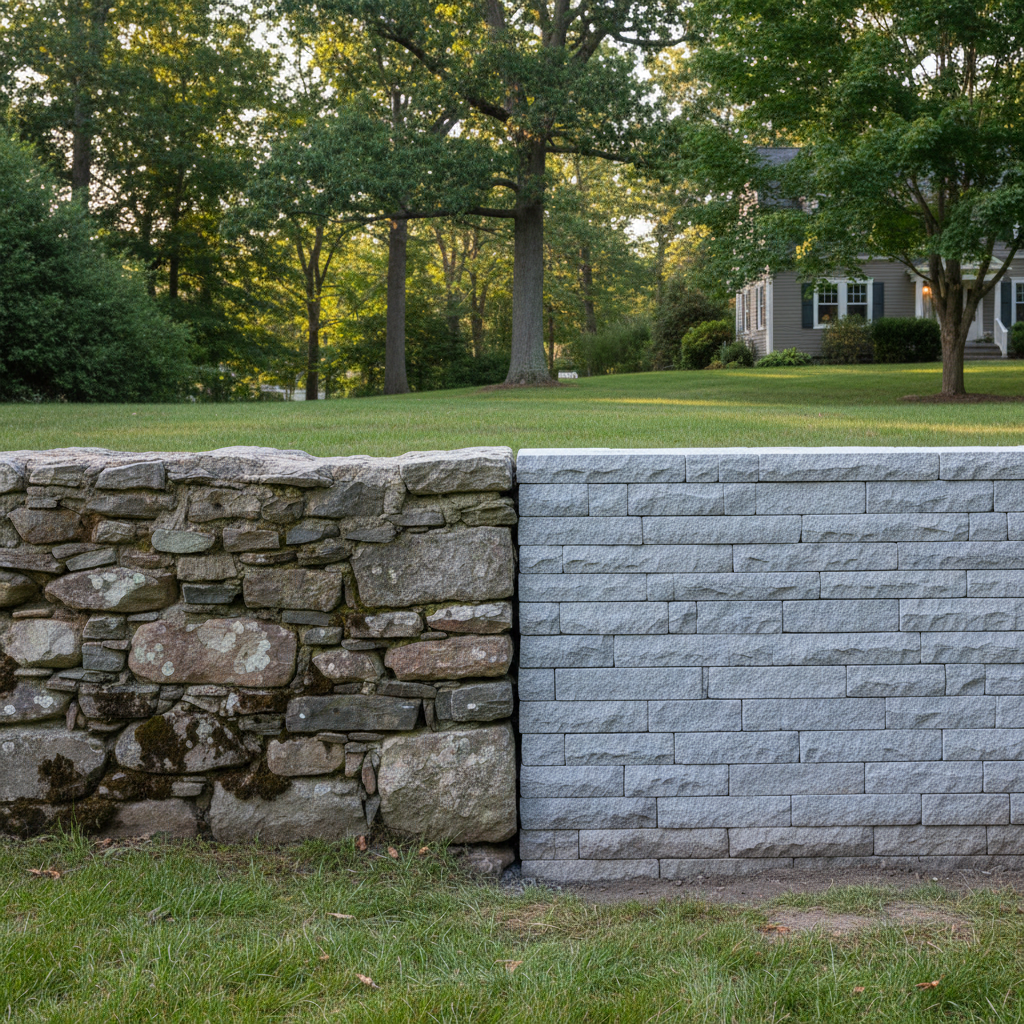
You're probably thinking about adding some stone to your place, right? Maybe a new facade, a cozy fireplace, or even a sturdy retaining wall. Smart move; stone really does add a ton of character and boosts value. But then you start looking around, and it hits you: there are a couple of main ways to do this, and it can get a little confusing. We're talking about thin stone veneer versus full bed natural stone. What's the real difference between them, and which one makes more sense for your home here in Lexington?
What's the Deal with Full Bed Stone?
Let's kick things off with full bed stone, because that's the classic, traditional way of doing things. When I say 'full bed,' I mean actual, solid pieces of stone. These aren't just decorative slices; they're usually 3-5 inches thick and weigh quite a bit. Picture those old stone walls you see all over New England, or the foundations of some of the older homes in the Merriam Hill area – that's often full bed stone, no doubt about it.
Appearance: It's the genuine article. You get that deep, really substantial look. The way the light plays on it, the shadows it casts – it's just different. It has a timeless, authentic feel because, well, it is authentic.
Durability: This stuff is built to last. When installed correctly, full bed stone can stand for centuries. It's incredibly tough against weather, impacts, and just general wear and tear. You're essentially building a structure that becomes part of the earth.
Cost: Here's where it gets heavier, both literally and financially. The material itself costs more since you're buying a lot more stone. Then there's the labor. It's harder to transport, cut, and lay these heavy pieces. Plus, you often need a deeper, stronger foundation to support all that weight, which definitely adds to the overall project cost.
Installation: This is a true masonry job. You need a skilled mason who really knows how to work with natural stone, how to prepare the foundation, and how to lay it properly. It's a slower, more involved process, for sure.
Maintenance: Pretty low. Once it's in, you mostly just keep it clean and make sure the mortar joints are sound over the decades. No special treatments are usually needed.
And What About Thin Stone Veneer?
Now, let's talk about thin stone veneer. This is natural stone too, but it's cut much thinner, typically about 1-1.5 inches thick. Think of it as the face of a natural stone. It's really taken off in popularity over the last couple of decades, and for good reason.
Appearance: From a distance, it looks almost identical to full bed stone. Up close, you might notice it doesn't have quite the same depth on the edges, but the face of the stone is still 100% natural. You get all the same colors, textures, and variations you'd find in full stone.
Durability: It's still natural stone, so it's very durable. It holds up well to weather and impacts. The main difference isn't the stone itself, but how it's attached. It's mortared onto a substrate (like cement board or block), so the strength of that bond is super important. If installed correctly, it'll last a lifetime.
Cost: This is often where thin veneer wins out for homeowners. The material cost is less because you're buying less stone by volume. The labor is also generally less because it's lighter and quicker to install. You typically don't need to upgrade your foundation to support the weight, which can be a huge saving, especially on existing structures. What a relief!
Installation: It's still a masonry job, but it's less labor-intensive than full bed stone. It can be applied over a wider variety of surfaces, making it more versatile for renovations or additions where a heavy foundation just isn't practical.
Maintenance: Similar to full bed stone – keep it clean, check the mortar joints over time. The stone itself doesn't need any special care.
My Take for Lexington Homeowners
So, which one should you choose? Honestly, for most homeowners in Lexington today, especially if you're working on an existing home or a new build where budget is a factor, thin stone veneer is usually the smarter choice.
Here's why:
You get the incredible aesthetic appeal and durability of natural stone, but at a significantly lower cost. The look is virtually indistinguishable to the untrained eye, and it performs beautifully against our harsh New England winters – those freeze-thaw cycles we get here can be brutal on poorly installed materials, but a properly installed thin veneer holds up just fine.
Where full bed stone really shines is if you're building a brand-new, high-end custom home and want that absolutely undeniable, deep, traditional look, and the budget allows for it. Or if you're doing a restoration on a historic property where maintaining authenticity is paramount, that's another good reason.
For most projects – a new fireplace, an accent wall, a foundation skirt, or even a full exterior renovation – thin stone veneer gives you 95% of the benefits of full bed stone for a fraction of the price and effort. We've done countless projects with thin stone veneer here at All Star Masonry Inc, and our clients are always thrilled with the results. It's a fantastic way to get that classic New England stone look without breaking the bank or requiring massive structural changes.
Think about what you're trying to achieve, your budget, and the existing structure. If you're still on the fence, give us a call. We can look at your specific project and help you figure out the best approach.